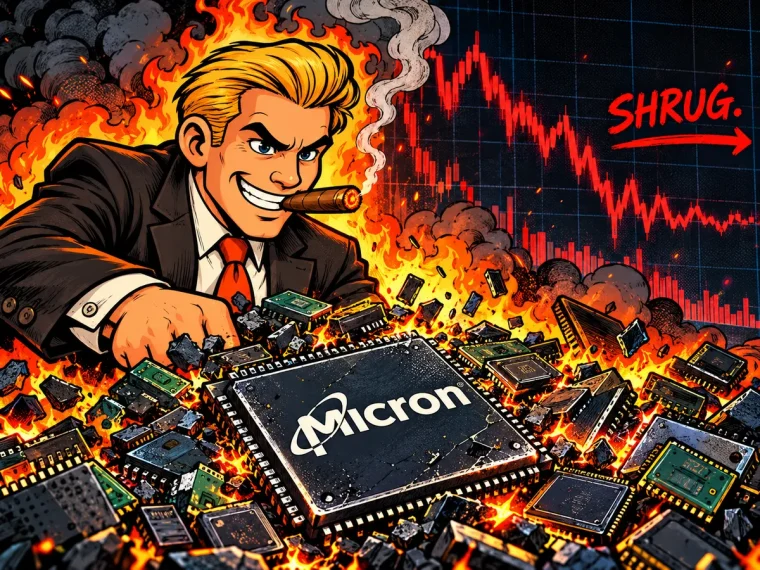



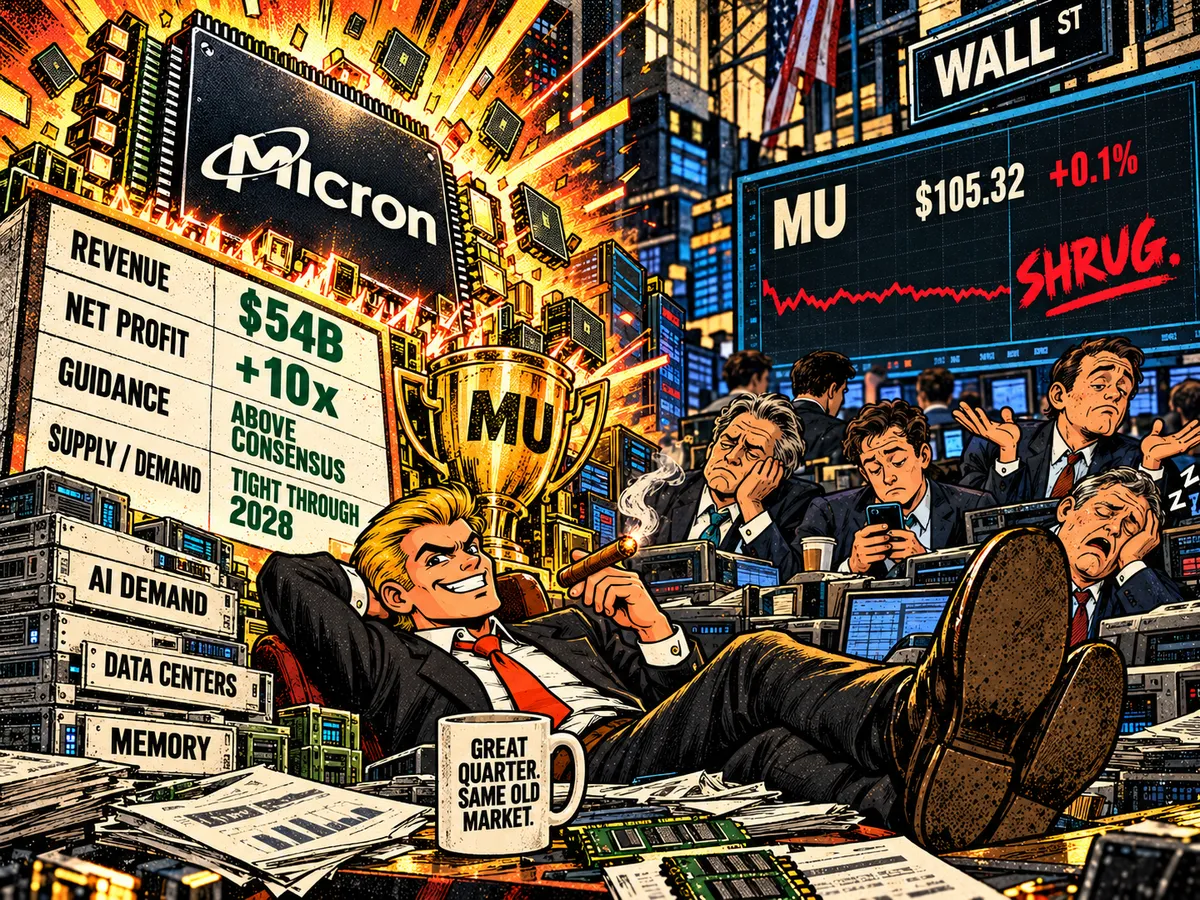
Micron printed $54 billion in revenue last quarter. Nearly 4x year-over-year. Net profit up more than 10x. Guidance well above consensus. Management said supply and demand in the memory market would stay tight through 2028.
The stock closed flat.
Let that sink in for a moment.
If you’d handed any analyst on Wall Street those numbers two years ago, they would have fallen off their Herman Miller. Instead, the market looked at one of the best semiconductor quarters in recent history, shrugged, and went back to arguing about the Fed.
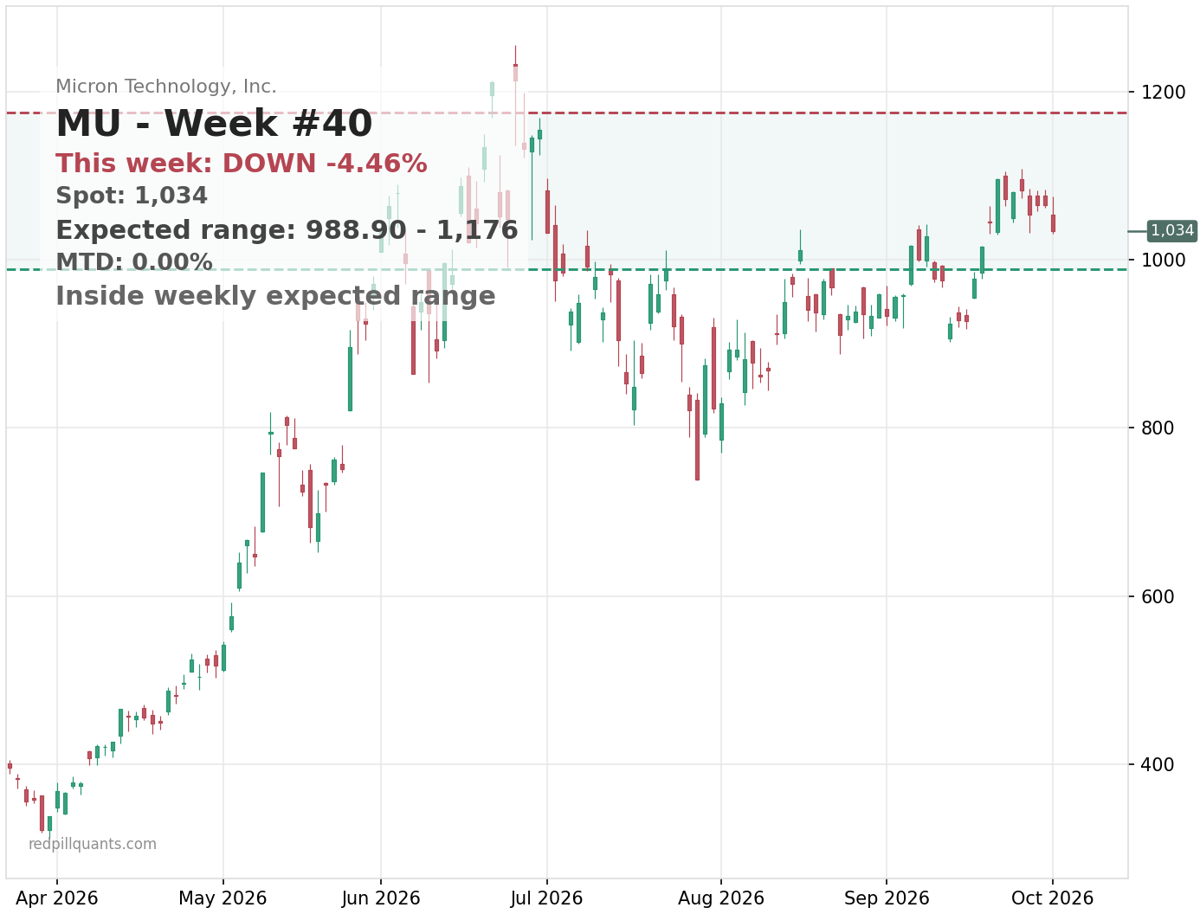
MU is sitting near $1,034, still in the upper end of its three-month range. The medium-term structure is constructive. But the most recent session was a hard down day, off about 2.9%, and the stock is down roughly 4.5% on the week. The options market is pricing an 8.6% weekly move. That’s not calm consolidation. I wouldn’t even call it uncertainty. It’s a market that has stopped caring about good news. Which, if you’ve been around long enough, is usually when things get interesting.
Analysts have an average price target around $1,550 on a stock trading near $1,065. That’s a nice gap. It’s also worth remembering that price targets are opinions, and on Wall Street, opinions are cheaper than coffee. The market, which read the same earnings report, is currently voting differently.
When a stock does nothing after a beat-and-raise of this magnitude, the question isn’t “was it a good quarter?” It obviously was. The question is why nobody cared.
Here’s the short answer: because everyone already believed it.
The AI memory supercycle has been the consensus trade for over a year. And the market has never, in the entire history of markets, paid you for telling it something it already knew. The “discovery” phase, where price moved on narrative alone, appears to be over. What replaces it is a verification phase. The market now needs to see that demand is durable, that the capex cycle is real, and that the revenue isn’t circular. Hey, that actually sounds reasonable, which is somewhat unexpected given how this crowd usually operates.
Understandably there’s now growing scrutiny around the structure of AI spending, specifically whether some of the capex flowing through names like Nvidia represents genuine end-user demand or whether it involves financing arrangements that effectively recycle investment back into the same ecosystem. In other words: is anyone actually buying this stuff to use, or is the money just going in circles? If that perspective deepens, it puts a question mark over the entire AI trade, including the memory suppliers sitting downstream from it.
Micron’s management can project tight supply through 2028 and be completely right about the physical market. The stock can still struggle if investors aren’t convinced the demand stands on its own. Being right and making money are two different sports.
Then there’s the yield problem. The 10-year Treasury is at 5.31%. Yikes. That’s a level not seen in roughly 24 years. At 5.3%, the risk-free rate isn’t background noise anymore. It’s a competitor. And for a lot of portfolio managers, it’s starting to look like the most attractive trade in the room, which is not exactly what growth stock bulls want to hear.
For a name like MU, where a meaningful portion of the investment thesis lives in future earnings, a higher discount rate compresses what those future earnings are worth today. Analysts can raise their targets all they want. If the rate that discounts those targets keeps moving against them, the math doesn’t care about the narrative. Never has, never will.
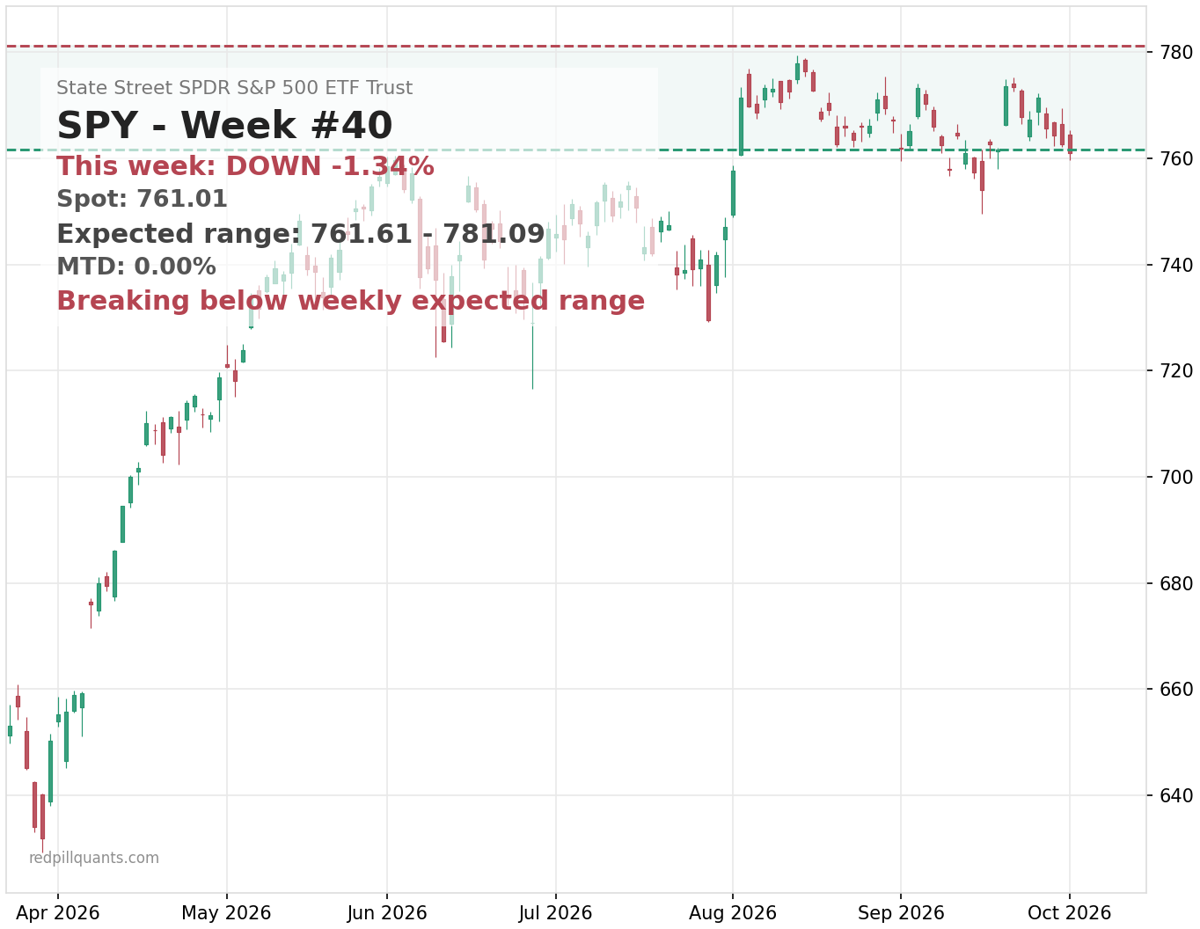
Meanwhile, SPY closed near $761, down about 1.35% on the week, kissing the lower boundary of its weekly expected move, which is a narrow range of about 1.3% of spot. More importantly, the short-term trend just flipped bearish.
No, that’s not a crash signal. But it’s the kind of quiet deterioration that tends to get ignored right up until things start getting ugly. I’ve seen this movie before. Let’s keep an eye on that.
QQQ is holding better, near $739 and still in the upper end of its EM range, but it’s giving back last week’s gains without a clear catalyst to stop the drift. VIX nudging up about 7% on the day suggests the compression everyone’s been enjoying may not last much longer. Volatility is patient. Until it isn’t.
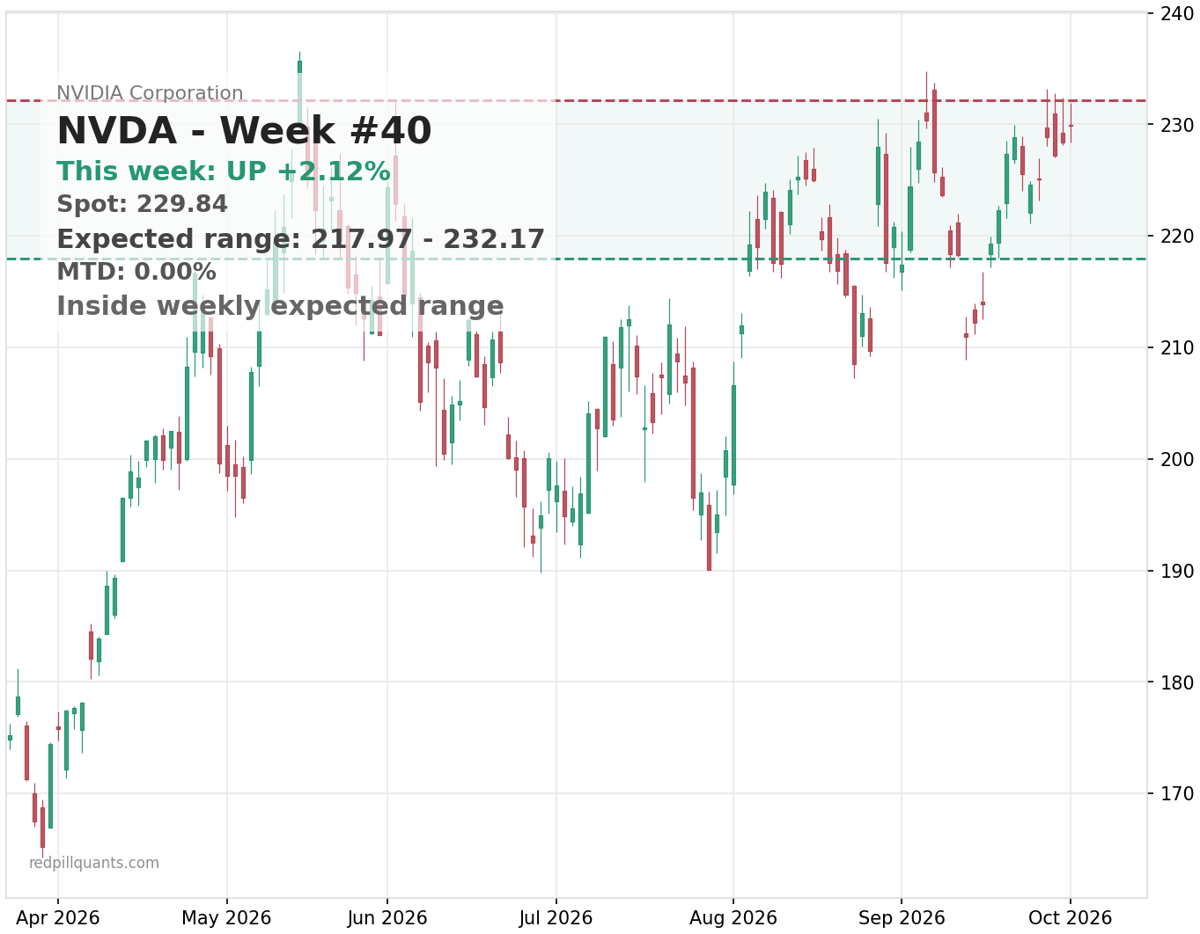
NVDA is the interesting outlier. Near $230, up about 2% on the week, chilling in the early autumn sun at three-month highs with the cleanest momentum of any ticker in the usual suspects lineup. Where MU can’t hold strength, NVDA keeps finding bids. Lesson of the day: if it makes too much sense, the market will find a way to make you look stupid for believing it.
Whether that divergence means something or is just noise, the next few weeks will answer. But it’s worth noting that Nvidia is also the name at the center of the circular financing questions. Which makes its relative strength either a sign of genuine demand confidence, or the market’s way of being wrong for just a little while longer. We’ve all been there.
Here’s the practical takeaway. MU’s flat reaction after a historic quarter is not a minor detail. It may be the canary in the coal mine. Discrepancies in highly correlated assets suggest that the rules have changed. The fundamental case now needs to be verified by external demand, not just stated by management. Buying the earnings beat because the numbers were good was the obvious trade. The obvious trade got nothing.
That’s the kind of tape where instinct and structure are running in opposite directions. Structure tends to win. Ask anyone who’s been doing this long enough and still has a brokerage account.
If you want this kind of read (structure, trend state, volatility regime, options context) turned into live signals on SPY and the broader equity tape, that’s what SPY Alpha does. Take a look.
Cheers,
Michael