




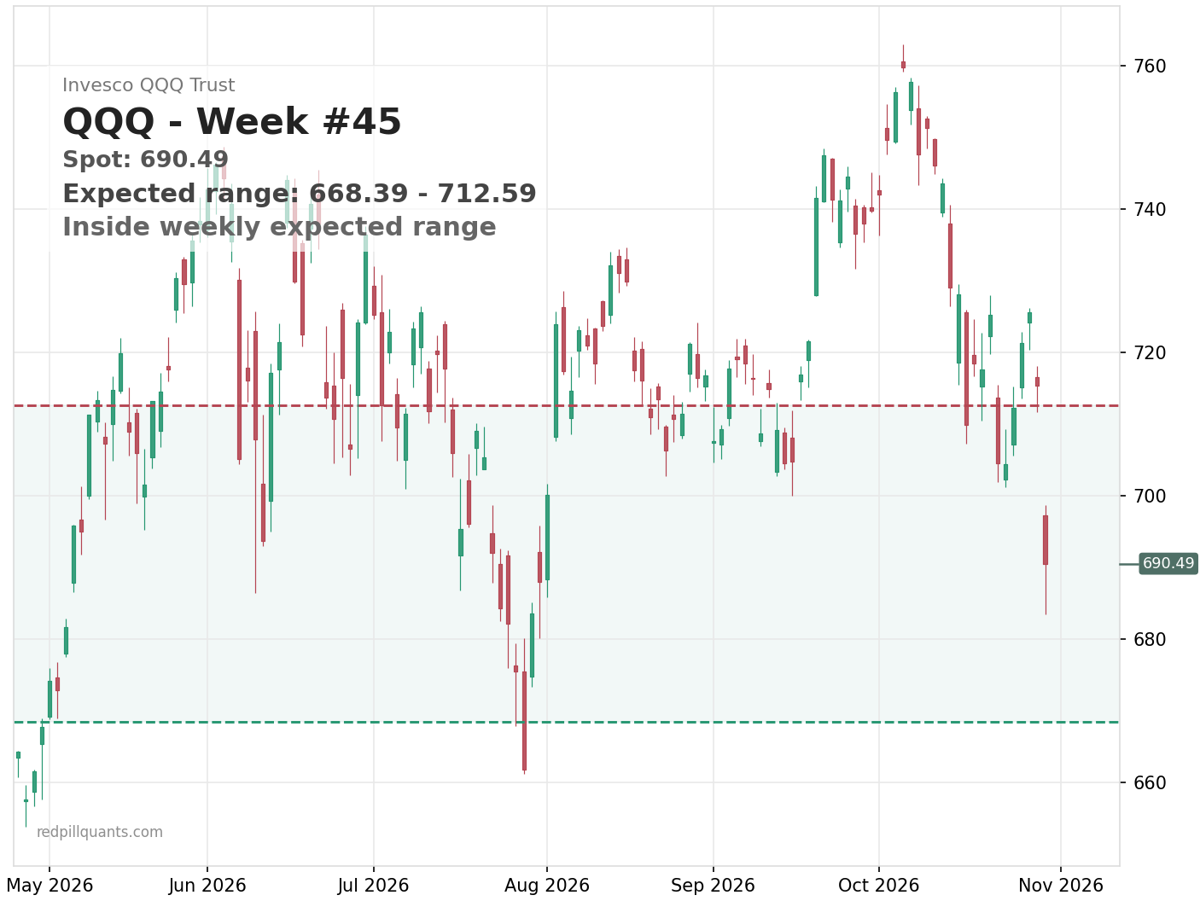
QQQ closed Friday at $690, roughly 1.6% above its blue 200-day SMA, after a 3.5% flush. Which means every dip-buying thread on the internet now has a chart to point at. Index on the big line. Buy the level. Simple.
Except the index hides what actually happened Friday. Four big tech names fell by wildly different amounts for different reasons, and QQQ blended them into one tidy number.
Intel lost 28.6% in a single session. AMD dropped 10.9%. Palantir gave back 6.3%. Apple fell barely 1%. That is not a tech selloff washing over the whole complex. That is the market quitting the idea of AI as one trade and pricing it name by name, on margin and capex math. The index just averaged a multi-vehicle pile-up into a 2-minute news report.
Dip buyers are leaning on $684 as their defined-risk entry. The options market’s own lower bound for this week sits around $668, which puts that level sixteen dollars inside a perfectly normal week, before Apple and Palantir have said a word.
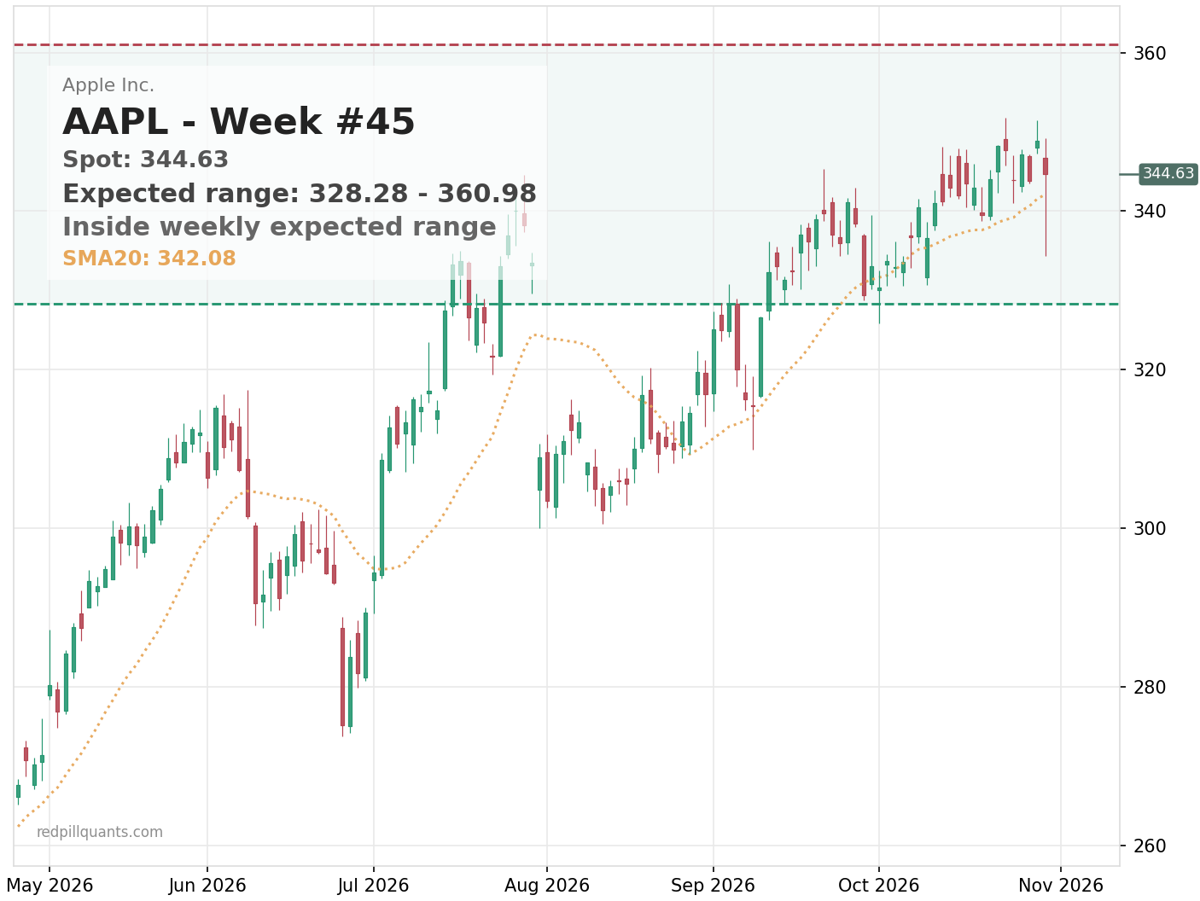
Apple is the one mega-cap that held its trend through the flush. Closed at $344, still above the orange 20-day SMA and in the upper quartile of its three-month range. It reports tonight, consensus around $2 EPS on roughly $113B in revenue.
The actual fight is memory costs. Goldman stays constructive on the print. BofA is cautious about what rising memory prices do to gross margin. That argument gets repriced on the call tonight, not on the chart. Nobody’s 200-day moving average has an opinion about DRAM pricing.
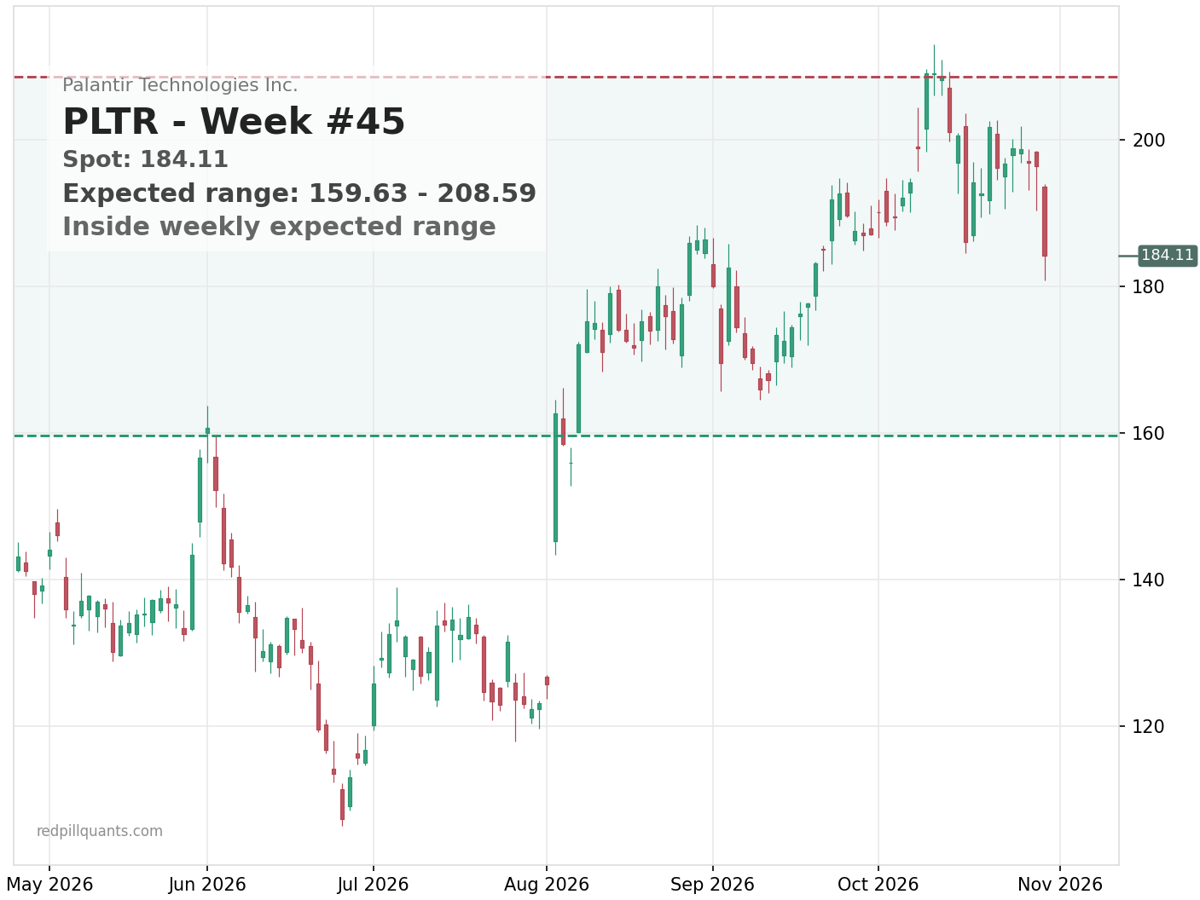
Palantir reports tonight with the mirror-image setup. It fell 6.3% Friday into a fresh bearish transition, and its weekly expected move is a very wide 13% of spot. The options market has already priced a big verdict. Buy premium into that and you can be right on direction and still lose money when implied vol collapses after the print.
Consensus wants roughly $2.18B in revenue at 60% margins, and US commercial customer growth is the number that decides the reaction. A revenue beat with soft commercial adds is not a beat. It’s a headline.
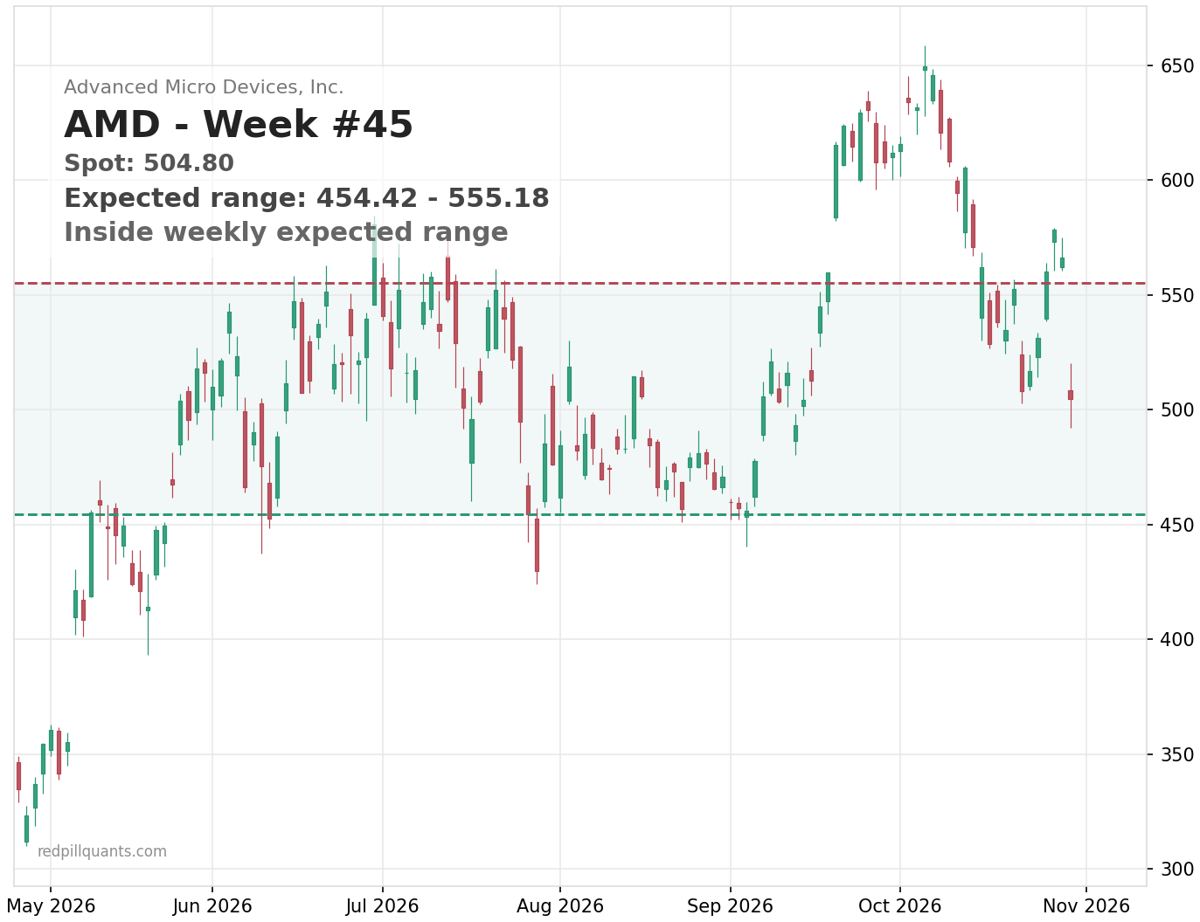
AMD doesn’t report until Tuesday evening and already took the punch, down 10.9% Friday on what was reported as sympathy with Intel’s collapse rather than anything shared in the fundamentals. Correlation is a real factor in earnings season, and it has become an entry flag for all my equities systems (e.g. Payday Friday, Spysniper, or SigmaPirate) for a reason.
The stock is off about 20% over the past month in a damaged downtrend, carrying a wide 10% weekly expected move into this week. Getting taken out behind the barn for someone else’s earnings, then having to report your own, is the kind of week management is going to remember.
Now why was Friday so violent? A reported ~$21B semiconductor rebalancing flow hit the tape, and prime-brokerage data pointed to hedge funds paring tech exposure into it. That’s reported positioning, not confirmed fact. It just happens to fit the tape we got, which is how most of these stories get squeezed into a narrative.
The calendar then compresses every decision into hours. Apple and Palantir tonight, AMD Tuesday evening, midterms Tuesday, jobs report Friday. Any bounce this week trades with a ceiling on conviction.
Week #45 Survival Guide
QQQ around $684 is the line in the sand that defines risk on any index bounce attempt, not a buy signal. A break below invalidates the dip-buy framing, no matter what tonight’s prints say.
And if the level holds, earnings decide what it meant. Apple’s gross margin commentary and Palantir’s commercial adds are the difference between a positioning flush that overshot and a fundamental repricing that still has room to run.
For what it’s worth, the weekly systems are not hero-trading any of this. SigmaScanner, the weekly options-spread engine behind Payday Friday, ran its Friday cycle with two bull calls and two bull puts, business as usual. Blitzer is holding a Costco call debit spread into the week. Defined-risk structures on weekly clocks, with no opinion about the 200-day. That’s the job: survive the week and fight another day.
If you want this kind of read (levels, structure, expected move) turned into actual entries and exits instead of another chart to stare at, SPY Alpha covers equities and index options. check it out here
Cheers,
Michael